According to various estimates, we meet 10,000 to 80,000 people in our lifetime. Only a very few walk with us for our (or their) entire lifetimes. Some pass through shaping our life and experiences profoundly. Many we meet but once. But there are those who were an intrinsic part of our daily lives, but remained largely anonymous. The rickshaw-puller who pedalled us to school. The maid whom we only knew as Putul’er Ma (mother of Putul). The mishtiwala who sweetened our childhood while walking door to door in the blazing sun. And the naptini.
In Bengali, naptini is merely the feminine form of napit—a professional barber. A common noun which is an occupation, a trade, even a social status. But became a name. For this is the story of one particular naptini. I never knew her name and never heard anyone call her by one; she was simply the naptini. It was her entire identity.
She was a part one of my enduring childhood memories. Of winter holidays spent with my maternal grandparents. This was when a cohort of aunts, uncles and cousins (sometimes more than a dozen of us) descended on the old home with its flagged courtyard and wide verandah. When the cold of the misty mornings was banished by hot jalebis, when the warmth of the winter sun and the smell of wood smoke filled the courtyard. And the naptini arrived.
The ritual
Within a day or two of our homecoming she would be at the door, looking as she always did, holiday after holiday. Silver-haired, tall and straight-backed, with a dark weather-beaten face, paan-stained teeth, and intelligent, shrewd eyes. She would greet my grandmother and aunts, inquire after those who were absent, cordial but never familiar or obsequious.
Then it was pedicure time. It was strictly a ‘women’s-only’ affair. The naptini would settle herself on a low stool in the courtyard where a short flight of steps faced the kitchen. Opening a small pouch, she would lay out the meagre tools of her trade—a nail parer, an ancient oval pumice stone, and a loofah which would have now been exalted as natural, vegan, organic and eco-friendly! A towel, a basin and a pail of hot water would be provided, and she would set to work on that neglected part of our anatomy—our soles.
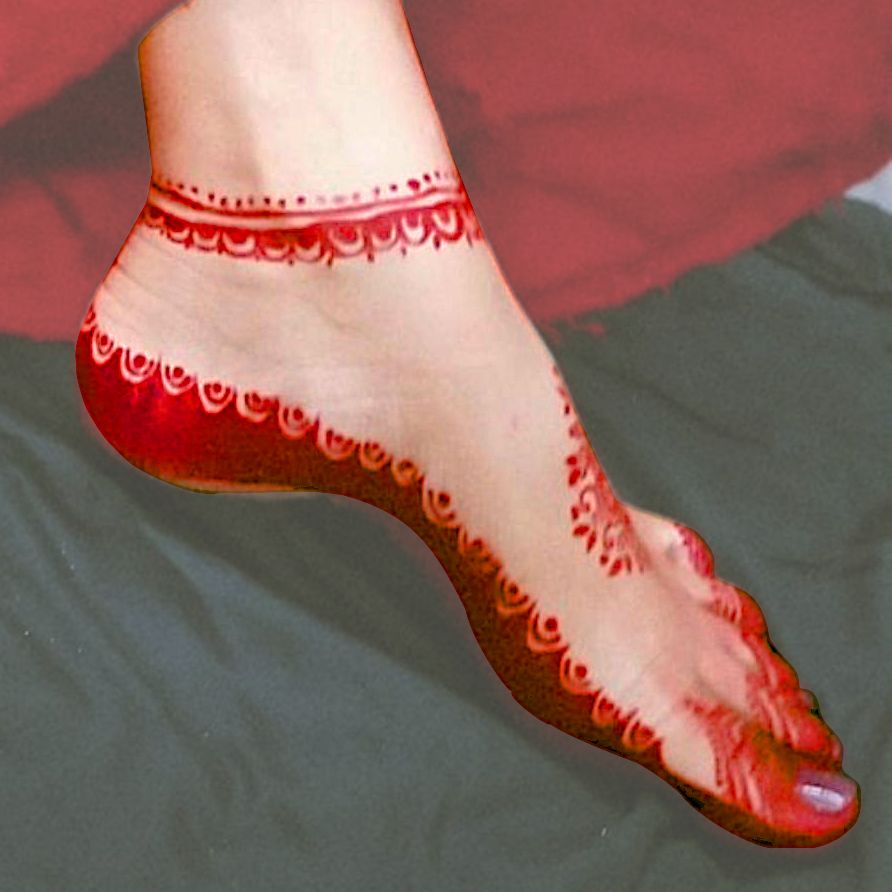
I would watch fascinated as she rhythmically soaped, scrubbed and massaged. She attacked my mother’s and aunts’ roughened heels with vigorous application of the pumice stone and disapproving tut-tuts of her tongue. The skill of a thousand scalpel-bearers behind her, she wielded the nail parer with a effortless precision, filing, scraping smoothening. A rubdown with the rough towel and then came the grand finale. Dipping a little wad of cotton wool into the bottle of alta she painted the feet with deft strokes, in a ritual that can be traced back a couple of millennia! Thus did Kalidas poetically describe Malavika’s feet being adorned in Malavikagnimitram!
a magic touch
As a special treat, we girls were allowed to have a pedicure too. The pumice stone and rough towel tickled our soles, but what I remember most is the feel of her rough but gentle touch on my feet.
Finally my grandmother, having put the finishing touches to a sumptuous multi-course lunch, emerged from the kitchen. The naptini lavished much time and attention on her favourite client. It was surely the magic of the naptini’s touch that kept my grandmother’s feet soft and dainty throughout her life. For even in the bitterest winter she never donned footwear, and knew nothing of lotions and foot creams!
The grapevine
But a pedicure was not the naptini’s only role. She was the neighbourhood confidante and messenger, the thread that bound the womenfolk of the small Bengali community together. While her hands lathered and kneaded, she carried on a conversation with my grandmother through the open kitchen door, updating her on the pregnancies and bereavements, the illnesses and little tribulations of the many lives she touched.
While we dismissed it then as idle gossip, I now know that it was a vital social network—the only means for the mostly home-bound women to keep in touch with each other. The news of our arrival was circulated in much the same way, and it was a testimony to its efficiency that we were expected and welcomed at every house we visited!
A requiem
Half a century has gone by since I last felt her rough hands on my feet. Attentive young girls whom I know by name try to keep me on well-groomed feet. A click of a few buttons on my smartphone, and I can soak my feet in the comfort of my own home. But I long to return to the sun-dappled courtyard where my grandmother’s voice floats out from the kitchen. And wait for the silver-haired naptini whose name nobody knew.
2 responses to “The naptini”
Beautifully recalled memory!
Thank you!