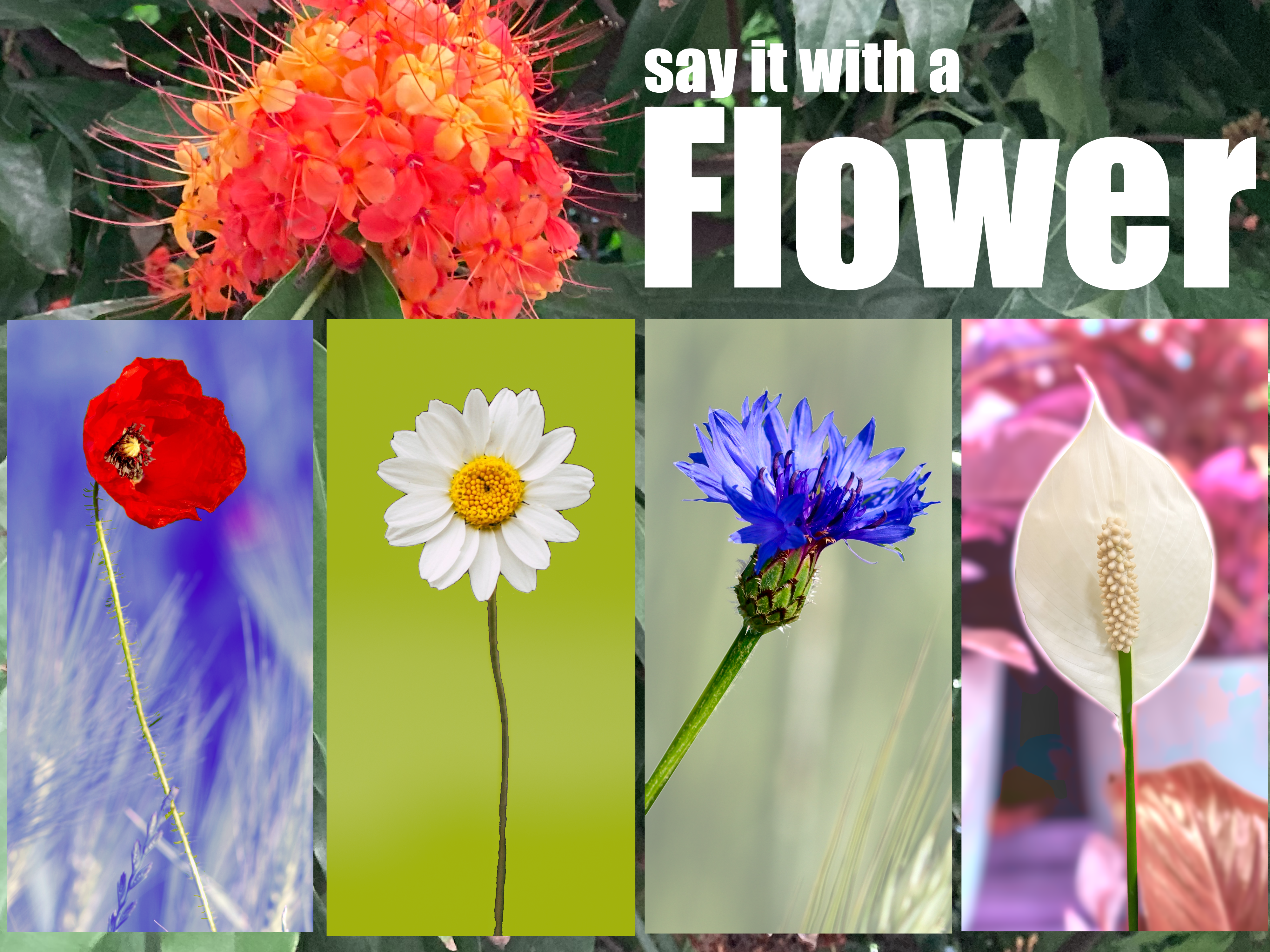
It’s that time of the year again. The gulmohur(Delonix regia) blooms, and our sidewalk transforms into a crimson battlefield with the fallen flowers of war. Elsewhere in the world, real wars continue. Mercifully, we have left behind the days of close combat that drenched the battlefield with the blood of soldiers. Warfare is now fought from afar by brilliant missiles that reduce cities into dark, dismal heaps of rubble.
But amidst these scenes of destruction and despair, hunger and homelessness, life continues. It’s springtime, a time for blooms. A green stalk pushes its head from under the debris; wildflowers carpet hillsides and valleys where blood was shed. The flowers of wartime bloom, nourished by the bodies of the dead.
Blooms and bloodshed
The association of flowers and war is not a new one. We have used flowers as metaphors of glory and victory; and as symbols of resistance, patriotism and loyalty. They have brought much-needed love and comfort to battle-weary soldiers. Flowers have also served as tokens of remembrance for the fallen; and as enduring messengers of peace.
What can possibly be common between the fragile beauty of flowers and the ugly desolation of war? What links the two? Perhaps it is the reminder that life is beautiful but brief; and we must yet bloom, knowing that death is ever-present and near.
The glorious wounded
In the great epic Mahabharata, the scene of the greatest, bloodiest battle ever described, flowers make an unlikely appearance. For the warrior class of Kshatriyas, war and death on the battlefield was a matter of honour. Not surprising then that the wounded warriors, blood pouring from arms and torsos, are described as ‘beautiful as the kinshuka tree in bloom‘ — a reference to the flowering palash or the flame of the forest (Butea monosperma). Elsewhere, blood spurting from penetrating arrows make them ‘dazzle like the flowering ashoka tree‘ (Saraca indica) while the faces of the fallen dead are compared to ‘blue lotuses‘ in the river of blood.
The palash comes back to us in a different context many centuries later. In a defining moment of Indian history, in the battle that laid the foundation for colonial rule—the Battle of Plassey. Yes, Plassey is no more than an Anglicised version of Palashi—a village named for its many palash trees.
from home, with love
The battlefield is no bed of roses. In the bleak bunkers of war, letters from home were sometimes the only source of comfort for the men—sometimes mere budding youths. Flowers carried their messages of love and tenderness better than any words possibly could. In the American civil war, wives and mothers of soldiers sent them tiny sprigs of violets. Similarly, dried and carefully preserved forget-me-nots were slipped into letters from the families to the German men at the battlefront.
Then there is the touching story of the Canadian officer, George Stephen Cantlie, who gathered wildflowers from the war trenches of Europe to sent to his infant daughter back home! Sealed with infinite tenderness, and opened with tremulous joy, the wealth of emotions those fragile blooms conveyed!
daisy speak
The flower in your buttonhole can signify a silent protest or a strong statement. The humble daisy was one such. Adopted by Queen Wilhelmina in exile, it came to symbolise the Dutch resistance and patriotism in the Second World War. And who can forget the War of the Roses? In that turbulent time of betrayal and bloodshed in British history, loyalties were defined by the colour of the rose in one’s buttonhole. White and red, warring factions of the same beautiful rose, stained by the blood of power-hungry men.
Red as poppies, blue like cornflowers
But it was The Great War that brought the flowers of war into public consciousness. Fields of blood-red poppies and blue cornflowers blossomed over the graves of the soldiers buried around the battlefields of Europe. Evocatively immortalised by John McCrae’s ‘In Flanders Fields‘, the red poppy became the symbol of remembrance of those who die in war and conflicts across many parts of the world. The French chose the blue cornflower (the bleuets) to honour disfigured veterans who bore scars of battle on their faces and bodies. Elsewhere in the world, roses, carnations, gladioli, irises and chrysanthemums honour those who gave up their lives in battle so we could live in peace.
Lest we forget
So let us pause awhile as we pin that red poppy on our lapels in remembrance. And listen to those whose lives were nipped in the bud by war. What is the message from those lying in the whitewashed graves? Do they exhort us to kill or do they plead for peace? As we place white peace lilies at memorials, we must ask ourselves—do we really give peace a chance? Our leaders lay a wreath one moment, and launch missiles the next. We talk peace and prepare for war.
The soldiers sleep—silent, unheard. Much like the flowers at their graves.